You Are The Weakest Link Goodbye . By , 2001, puffin edition, in english. # link # weakest link # you are the weakest link # you are the weakest link goodbye. Photos from "You're Out!" Reality TV Sendoffs E! Online from www.eonline.com You are the weakest link. You are the weakest link goodbye!. You're browsing the gamefaqs message boards as a guest.
How Does Catalyst Area Affect The Rate Of Reaction
How Does Catalyst Area Affect The Rate Of Reaction. The catalyst basically gets from reactants to products via a route that requires less activation energy. (a) catalysts can be classified into positive catalysts and negative catalysts (inhibitors).
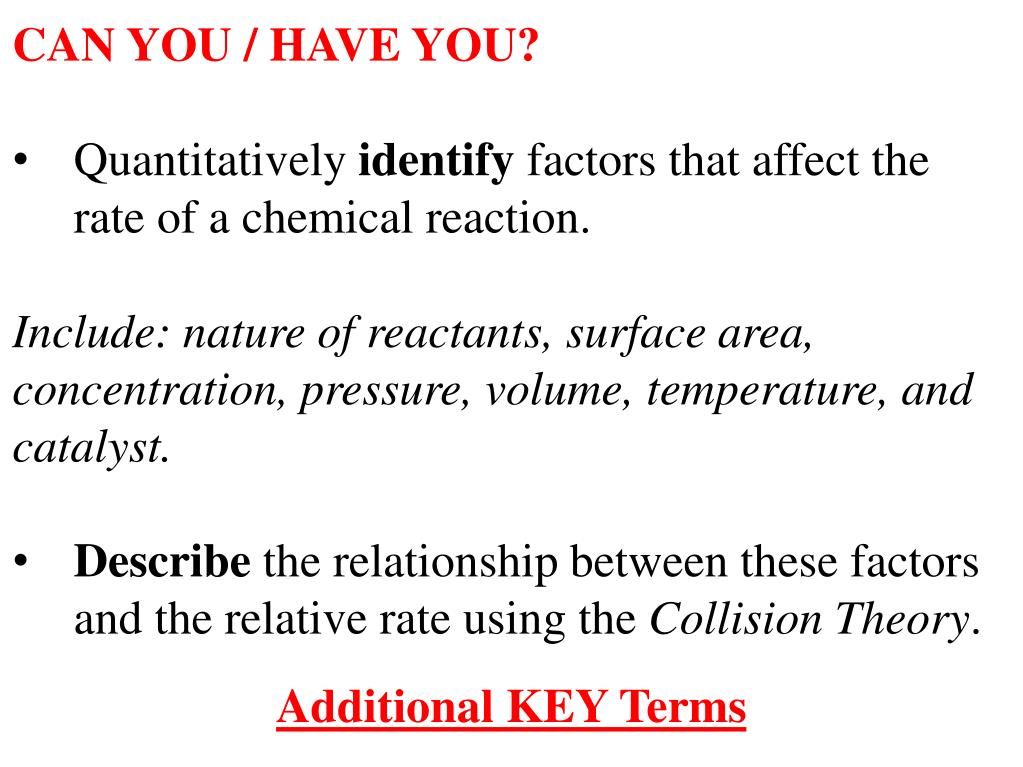
PPT Factors Affecting Reaction Rates PowerPoint Presentation, free from www.slideserve.com
Using a catalyst offers an alternative pathway for the reaction to follow, and this alternative pathway does not need such high temperatures. A catalyst changes the rate of reaction. In other words it’s a substance that increases the rate of a chemical reaction without being changed in identity.
The Reactants Use An Alternative Pathway To Get To The Reaction.
A catalyst changes the rate of reaction. The catalyst, manganese dioxide thus accelerates the chemical reaction while itself remaining unchanged throughout the reaction. (b) a positive catalystis a catalyst that increases the rate of a.
In Other Words It’s A Substance That Increases The Rate Of A Chemical Reaction Without Being Changed In Identity.
The surface area of a catalyst most certainly does affect the rate of reaction. A catalyst is a substance which changes the rate of reaction. To increase the rate of a reaction you need to increase the number of successful collisions.
This Works By Lowering The Activation Energy Needed To Start The Reaction.
Here manganese oxide acts as a catalyst. Positive and negative catalyst increase and decrease the rate of reaction respectively. Reaction rates can be affected by several factors, including concentration, temperature, surface area and presence of a catalyst.
However, The Way It Really Works Is Beyond My Knowledge To This Point.
A catalyst speeds up the rate of reaction, either simply making it faster, or such that the reaction can readily occur, because it is essentially a reactive substance that alters the mechanism of the reaction to promote collisions in the reaction (the more optimal collisions, the faster the reaction). 2kclo3 → 2kcl + 3o2. Adding a catalyst has exactly this effect on activation.
A Finely Divided Solid Has More Surface Area Available For Reaction Than Does One Large Piece Of The Same Substance.
To increase the rate of a reaction you need to increase the number of successful collisions. In the presence of catalyst, an alternative pathway with lower activation energy is made available. A catalyst provides an alternative route for the reaction.


Comments
Post a Comment